
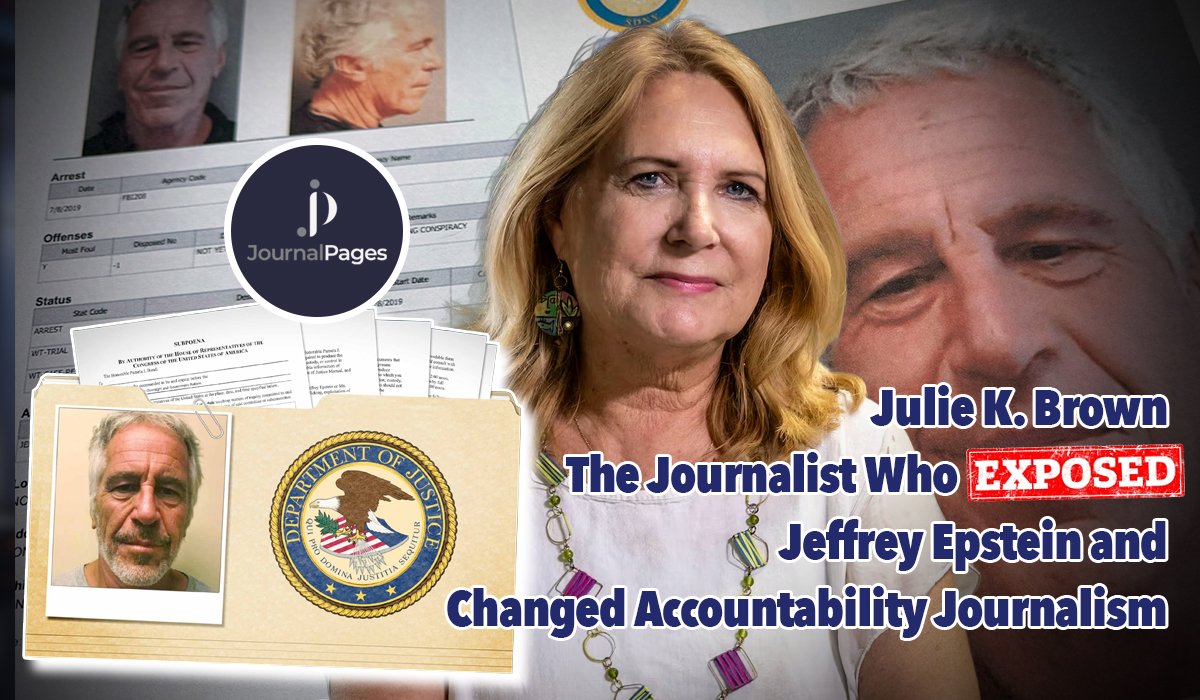
Julie K. Brown: The Journalist Who Exposed Jeffrey Epstein and Changed Accountability Journalism
Introduction: Who Is Julie K. Brown and Why She Matters
Julie K. Brown is an award-winning investigative journalist whose groundbreaking reporting on Jeffrey Epstein exposed one of the most significant failures of the American justice system. Her work not only reignited federal prosecution against Epstein but also reshaped how investigative journalism confronts power, wealth, and systemic injustice.
Working as a senior investigative reporter at the Miami Herald, Julie K. Brown spent years uncovering suppressed records, interviewing survivors, and revealing how Epstein received an unprecedentedly lenient plea deal in 2008. Her persistence led to global media scrutiny, legal reform discussions, and renewed public trust in investigative reporting.
This article provides a comprehensive, SEO-friendly deep dive into Julie K. Brown’s background, career, impact, and lasting influence—written for readers, researchers, and publishers seeking authoritative, trustworthy information.
Who Is Julie K. Brown?
Early Life and Education
Julie K. Brown is an American investigative journalist known for her deep expertise in criminal justice, corruption, and public accountability. While she maintains a relatively private personal life, her professional background reflects decades of journalistic rigor.
She earned her journalism education in the United States and began her career covering crime and courts—an experience that would later define her investigative approach.
Key traits объектов
-
Meticulous document analysis
-
Survivor-centered reporting
-
Long-term investigations
-
Legal and judicial expertise
Julie K. Brown’s Career in Investigative Journalism
Early Reporting and Professional Development
Before gaining international recognition, Julie K. Brown spent years reporting on:
-
Court systems
-
Law enforcement accountability
-
Judicial misconduct
-
Public corruption
This foundation allowed her to understand how legal loopholes and prosecutorial discretion can be manipulated by powerful individuals.
Joining the Miami Herald
At the Miami Herald, Brown became a senior investigative reporter, focusing on high-stakes accountability journalism. Her newsroom role gave her access to:
-
Archived court records
-
Sealed plea agreements
-
Survivor testimonies
-
Legal experts and whistleblowers
The Jeffrey Epstein Investigation: A Defining Moment
Background: The Epstein Plea Deal
In 2008, financier Jeffrey Epstein avoided federal prosecution for sex trafficking by securing a non-prosecution agreement—a deal that stunned legal experts due to its secrecy and leniency.
Despite allegations involving dozens of underage girls, Epstein served minimal jail time with work release privileges.
Julie K. Brown’s Investigation
Julie K. Brown reopened the case in 2017 after discovering sealed court documents and survivor silence enforced by legal intimidation.
Her investigative series, “Perversion of Justice”, revealed:
-
Federal prosecutors were pressured to drop charges
-
Victims were excluded from legal proceedings
-
Wealth and political connections influenced outcomes
📌 This reporting directly led to renewed federal investigation.
“Perversion of Justice”: Journalism That Sparked Global Change
Scope and Depth of the Series
The series included:
-
Over 60 survivor interviews
-
Hundreds of court documents
-
Multi-year legal analysis
-
Trauma-informed reporting practices
Impact on the Justice System
Julie K. Brown’s work resulted in:
-
Epstein’s arrest in 2019
-
Public exposure of prosecutorial misconduct
-
Increased scrutiny of non-prosecution agreements
-
Reforms in victim notification laws
Awards and Recognition
Julie K. Brown’s reporting has received some of the highest honors in journalism, including:
Major Awards
-
Pulitzer Prize for Investigative Reporting (2019)
-
George Polk Award
-
Gold Medal from the Florida Society of News Editors
-
National Headliner Award
These recognitions cement her authority and credibility within investigative journalism.
Writing Style and Journalistic Ethics
Survivor-Centered Reporting
One of Julie K. Brown’s most respected qualities is her ethical approach. She:
-
Gives survivors control over their narratives
-
Avoids sensationalism
-
Prioritizes accuracy over speed
Commitment to Transparency
Her work exemplifies:
-
Primary source verification
-
Legal fact-checking
-
Editorial independence
Julie K. Brown’s Book: Perversion of Justice
In 2021, Julie K. Brown expanded her investigation into a full-length book titled:
Perversion of Justice: The Jeffrey Epstein Story
What the Book Covers
-
Behind-the-scenes reporting
-
Additional survivor testimonies
-
Political and legal implications
-
Institutional failures
The book is widely cited in academic, legal, and media discussions.
Influence on Modern Investigative Journalism
Setting a New Standard
Julie K. Brown’s work has influenced:
-
How newsrooms handle sealed records
-
Trauma-informed interviewing techniques
-
Long-term investigative funding
Educational Impact
Her reporting is frequently referenced in:
-
Journalism schools
-
Legal ethics discussions
-
Media accountability panels
External Authoritative References
Use these trusted sources for outbound links:
-
Miami Herald (journalism archive)
-
Pulitzer Prize official website
-
Columbia Journalism Review
-
U.S. Department of Justice (legal standards)
Frequently Asked Questions (FAQs)
Who is Julie K. Brown?
Julie K. Brown is a Pulitzer Prize-winning investigative journalist known for exposing Jeffrey Epstein’s secret plea deal.
What did Julie K. Brown uncover?
She revealed systemic failures in the U.S. justice system that allowed Epstein to avoid federal prosecution.
Did Julie K. Brown write a book?
Yes, Perversion of Justice details her investigation and its broader implications.
Why is Julie K. Brown important?
Her reporting restored accountability, empowered survivors, and reshaped investigative journalism standards.
Conclusion: Julie K. Brown’s Lasting Legacy
Julie K. Brown represents the highest ideals of journalism—courage, persistence, and ethical responsibility. Her work not only exposed one of the most notorious legal cover-ups in modern history but also reaffirmed the role of investigative reporting as a pillar of democracy.
As media landscapes evolve, Julie K. Brown’s legacy continues to guide journalists committed to truth, accountability, and justice.
For more Visit Journal Pages : https://journalpages.co.uk