
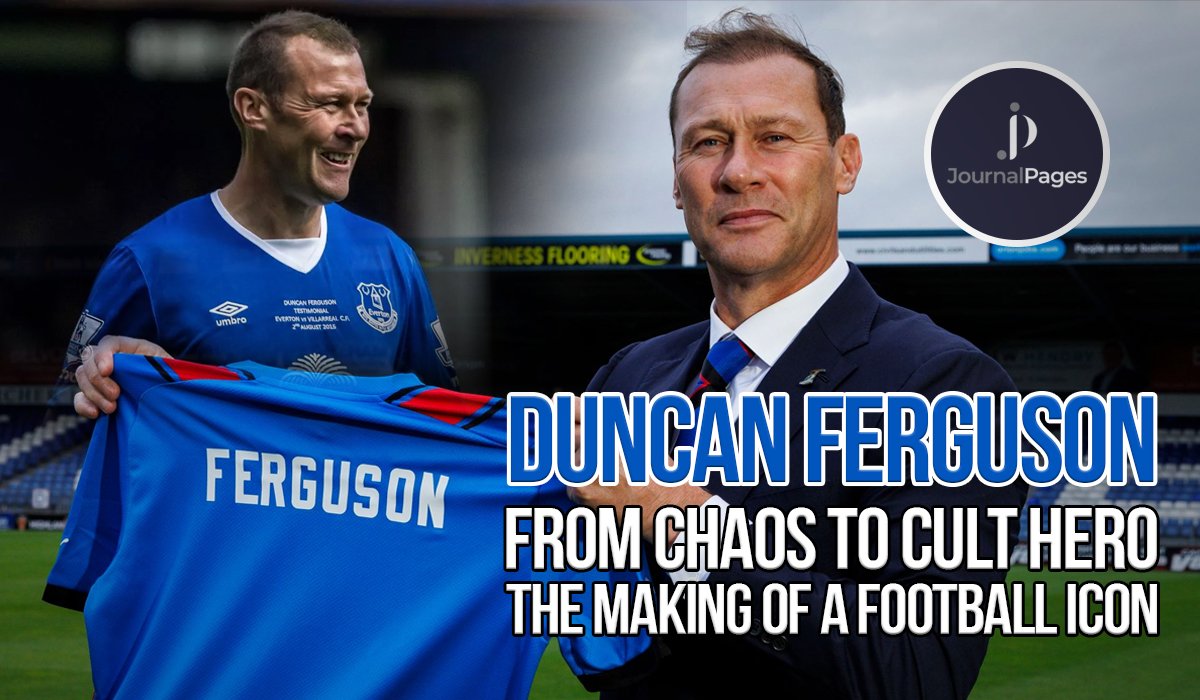
Duncan Ferguson: From Chaos to Cult Hero – The Making of a Football Icon
Few figures in British football provoke such raw emotion as Duncan Ferguson. To some, he was football’s last true enforcer; to others, a misunderstood talent whose aggression masked vulnerability. To Everton supporters, however, Duncan Ferguson is something rarer — a symbol of loyalty, redemption, and unapologetic authenticity.
His life and career stretch far beyond goals and red cards. They include prison walls, personal regret, fierce leadership, and ultimately, respect earned the hard way. This is the definitive, in-depth account of Duncan Ferguson — built for readers, fans, and search engines alike.
Early Life and Roots in Scotland
A Solitary Childhood
Born on 27 December 1971 in Stirling, Scotland, Duncan Ferguson grew up in modest surroundings. Unlike many future professionals, Ferguson was not shaped by structured academies or large peer groups. He has often described himself as shy, introverted, and isolated — a boy more comfortable with a football, animals, and solitude than social circles.
This emotional distance would later contrast sharply with his on-field persona.
Football as an Escape
Football became Ferguson’s refuge. His physical development was extraordinary — tall, powerful, and fearless in the air. Scouts quickly noticed his raw attributes, leading him toward professional football before emotional maturity had caught up.
Dundee United: Talent Meets Turbulence
Breakthrough at Tannadice
Ferguson began his professional career at Dundee United, where his aerial dominance and aggression made him one of Scotland’s most feared young strikers. He won the Scottish PFA Young Player of the Year, a sign of immense potential.
Yet discipline problems followed him closely.
Clash with Authority
Under legendary manager Jim McLean, Ferguson’s fiery temperament often collided with strict authority. Heavy fines, confrontations, and off-field incidents overshadowed his performances.
Still, his talent was undeniable — and Glasgow soon came calling.
Rangers FC: Pressure, Expectations, and Collapse
A Dream Move Turns Sour
In 1994, Ferguson joined Rangers for a then-huge £4 million fee. For a boy raised supporting the club, it should have been paradise.
Instead, it became a psychological pressure cooker.
Surrounded by intense scrutiny, rivalry culture, and personal demons, Ferguson struggled to adapt. Limited game time and nightlife issues worsened matters.
The John McStay Incident
A headbutt on John McStay during a match against Raith Rovers changed everything. Already on probation, Ferguson was sentenced to prison — a moment that permanently altered his life.
Barlinnie Prison: The Breaking Point
Life Behind Bars
Ferguson served 44 days at Barlinnie Prison, becoming one of the few footballers in modern history to serve time during their playing career.
The experience was traumatic. Threats, isolation, fear — prison stripped away his bravado. He later admitted that this period forced him to confront his immaturity and destructive behaviors.
A Harsh Education
Prison was not redemptive in a cinematic sense — but it was transformative. Ferguson emerged changed, though far from healed.
Everton FC: Finding Home at Goodison Park
A Loan That Became a Love Story
In late 1994, Everton signed Ferguson on loan. What began as an escape became the defining chapter of his career.
Away from Glasgow’s intensity, Ferguson flourished.
The Birth of “Big Dunc”
At Goodison Park, Ferguson became more than a striker — he became a leader. His relentless work rate, aerial power, and visible commitment resonated deeply with fans.
Across two spells, he scored 73 goals in 273 appearances, captained the side, and embodied the club’s fighting spirit.
FA Cup Glory
Under manager Joe Royle, Ferguson played a crucial role in Everton’s 1995 FA Cup triumph, cementing his status as a club legend.
Playing Style: Fear, Power, and Presence
Tactical Profile
-
Height: 6ft 4in
-
Strength: Elite aerial duels
-
Role: Target man, physical disruptor
-
Mentality: Warrior-leader
Ferguson’s style was not about finesse — it was about dominance. Defenders feared him. Supporters adored him.
Scotland Career: Regret and What Might Have Been
Walking Away Too Soon
Ferguson earned just seven caps for Scotland. Disillusioned by suspension disputes and media pressure, he retired from international football at just 23.
Later in life, he openly admitted this was one of his greatest regrets.
Coaching, Management, and Leadership
From Player to Mentor
After retirement, Ferguson remained at Everton, serving as youth coach, assistant manager, and twice as interim manager.
Working with Elite Minds
He worked closely with Carlo Ancelotti, absorbing tactical knowledge and leadership philosophy — a stark contrast to his chaotic youth.
Personal Struggles and Redemption
Financial Collapse
Despite earning millions, Ferguson declared bankruptcy in later life — a cautionary tale of poor financial literacy among athletes.
Sobriety and Self-Awareness
Ferguson eventually quit alcohol, acknowledging it as the root of many of his past issues. His honesty has since earned widespread respect.
Duncan Ferguson’s Legacy
What He Represents
-
Authenticity in football
-
Redemption after failure
-
Loyalty over glamour
He was never perfect — but he was real.
FAQs About Duncan Ferguson
Is Duncan Ferguson an Everton legend?
Yes. He is widely regarded as one of Everton’s most iconic modern players.
Did Duncan Ferguson really go to prison?
Yes. He served 44 days at Barlinnie Prison in 1994.
Why did Duncan Ferguson retire from Scotland duty?
Due to disputes with the Scottish FA and personal resentment following his suspension.
What is Duncan Ferguson doing now?
He continues to pursue top-level management opportunities in football.
Conclusion: A Career Forged in Fire
The story of Duncan Ferguson is not about perfection — it is about resilience. From prison cells to captain’s armband, from chaos to clarity, his journey mirrors the raw humanity that modern football often lacks.
He did not just play the game.
He lived it — painfully, honestly, and without apology.
For more amazing News Visit : JournalPages